




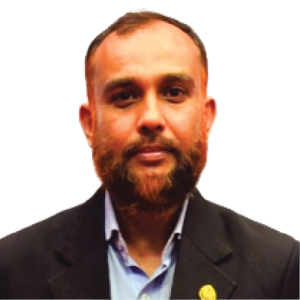
 Dr. Md Jamal Uddin
PhD (UU, NL) Post-doc (KU, DK)
Professor of Biostatistics and Epidemiology,
Department of Statistics,
Shahjalal University of Science and Technology (SUST)
Dr. Md Jamal Uddin is a distinguished researcher recognized among the World’s Top 2% Scientists in the 2024 Stanford University Global List, specializing in biostatistics and public health. He is a Professor of Statistics at Shahjalal University of Science and Technology (SUST) in Bangladesh, focusing on causal inference and health sciences. He completed his PhD from Utrecht University, Netherlands, and Post-doctoral research from the University of Copenhagen, Denmark. His research focuses on public health, epidemiology, biostatistics, and advanced data analysis. He has extensive experience in teaching, research supervision, and international collaboration. Dr. Jamal Uddin has contributed significantly to evidence-based health and statistical research in Bangladesh and beyond.
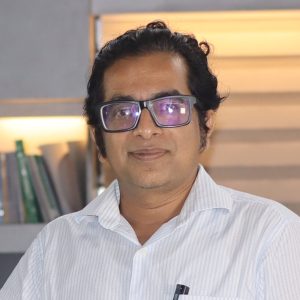 Dr. Rayhan M. Sharif
PhD
Professor and the Chair at the Department of English, Jahangirnagar University
Professor Raihan M. Sharif is a Professor and Head of the Department of English at Jahangirnagar University and a former Fulbright Scholar in the Department of Critical Culture, Gender, and Race Studies at Washington State University. Alongside academia, he works as a development sector consultant, teacher trainer, and corporate trainer. His expertise includes quantitative and qualitative research, research design, academic mentoring, and gender studies, with extensive work on gender mainstreaming and social inclusion. He has also taught cultural studies, gender studies, and research methodologies at numerous Bangladeshi universities, including Stamford, Brac, AIUB, IUB, East West, NSU, DIU, and BUTE.
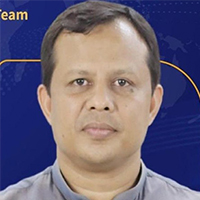 Khan Mehedi Hasan
Professor and Head of the Department of Economics at Khulna University
Prof. Dr. Khan Mehedi Hasan is a Professor and Head of the Department of Economics at Khulna University. Dr. Hasan is a distinguished academic and development economist with extensive expertise in regional economics, rural development, environmental and resource economics, and public health research. Dr. Hasan holds a PhD in Economics from Lingnan University, Hong Kong, which included an exchange at the University of Stirling, UK. His educational background also includes an MA in International and Development Economics from HTW Berlin, Germany, and an MBA from the University of Dhaka.Dr. Hasan has received numerous international scholarships and fellowships, including awards from the DAAD, Victor and William Fung Foundation, and Lingnan University. He has authored several peer-reviewed publications addressing critical development issues in Bangladesh, including livelihoods, gender empowerment, climate resilience, and healthcare accessibility.
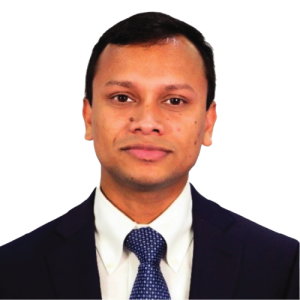 Muhammad Abdul Baker Chowdhury
Senior Biostatistician
MPH (Biostatistics- USA),
MPS (Demographic Analysis-DU),
MS (Statistics-SUST)
Senior Biostatistician, Department of Neurosurgery,
University of Florida, Gainesville FL USA
Muhammad Abdul Baker Chowdhury is a highly qualified researcher and biostatistician with academic backgrounds in Biostatistics, Demographic Analysis, and Statistics from institutions in the USA and Bangladesh. He is currently working as a Senior Biostatistician in the Department of Neurosurgery at the University of Florida. His expertise includes advanced statistical analysis, public health research, demographic analysis, and medical data interpretation. He has strong experience in research methodology and data analytics, contributing to evidence-based healthcare research. Through his professional and academic work, he supports high-quality scientific research and data-driven decision-making.
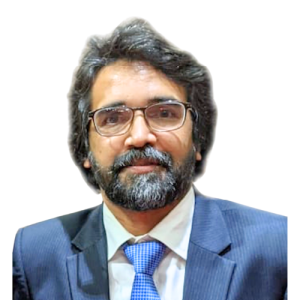 Dr. Md. Shahgahan Miah
PhD in Medical Anthropology
Department of Society and Health,
Mahidol University, Thailand.
Associate Professor, Department of Anthropology,
Shahjalal University of Science & Technology (SUST)
Dr. Md. Shahgahan Miah is an experienced academic and researcher specializing in Medical Anthropology and public health research. He completed his PhD at Mahidol University, Thailand, focusing on society, health, and human behavior. Currently, he serves as an Associate Professor in the Department of Anthropology at Shahjalal University of Science & Technology (SUST). His work integrates qualitative research methods with social and health sciences to address complex development issues. He has extensive experience in qualitative data analysis, research training, and academic mentoring. As a faculty member, he brings strong theoretical knowledge along with practical research expertise to the training program.
 Professor Dr. Md. Faruq Hasan (FH)
Professor Dr. Md. Faruq Hasan is a distinguished academic and researcher at the Department of Agricultural Extension, Hajee Mohammad Danesh Science and Technology University. His research focuses on sustainable agriculture, rural development, food security, climate change, and social policy. He has published numerous research articles in national and international journals and is actively involved in agricultural research and community development initiatives. Alongside teaching and research, he also serves in leadership roles, including Director of the Farmers’ Service Center at HSTU.
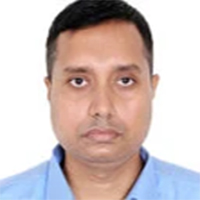 Asim Saha
Programme Manager (Planning, Monitoring and Evaluation – PM&E) at NETZ Partnership for Development and Justice (NETZ Bangladesh), is an experienced development professional with nearly two decades of multidisciplinary experience in public health, WASH, injury and drowning prevention, climate change adaptation and mitigation, disaster risk reduction, equal human rights, inclusive quality education, climate-resilient livelihoods, and nutrition. Skilled in project management, monitoring and evaluation (M&E), research, training, proposal development, and capacity building. Has a proven track record of international conference presentations, publications, and consultancy work with global organizations.
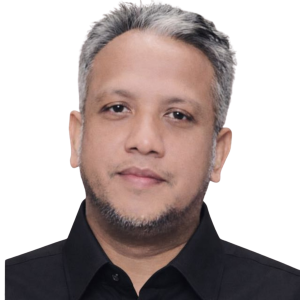 Mahmudun Nabi
Mr. Nabi, Co-founder director of Datascape Research and Consultancy Limited, is a research professional with nearly two decades of experience in survey-based social research, operations, and management. He has extensive expertise in planning, monitoring, learning, documentation and knowledge management, and research administration. Throughout his career, Mr. Nabi has worked with both local and international organizations, ensuring program quality and data integrity across diverse rural and urban settings. He has led and overseen large-scale survey projects across Bangladesh, focusing on sectors such as education, agriculture, food and nutrition security, health, rural livelihoods, market analysis, value chains, microfinance, and poverty research. Proficient in both qualitative and quantitative methodologies, he provides evidence-based insights to support policy-level decision-making.
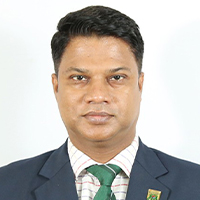 Al Jamal Mustafa Shindaini
Al Jamal Mustafa Shindaini is an Associate Professor in the Department of Sociology at Bangladesh University of Professionals (BUP) and a PhD Research Fellow at the Centre for Higher Studies and Research, BUP. He completed his BSS (Hons), MSS, and MPhil in Sociology from University of Dhaka. Over his 12-year academic career, he has taught at several universities, including BUP, Northern University Bangladesh, BUFT, and BUBT. He has published more than 21 peer-reviewed research articles in renowned international journals, focusing on topics such as the Rohingya crisis, COVID-19 and mental health, climate change, gender violence, and disasters. He also contributes regularly to newspapers including The Business Standard and The Daily Sun.
 Tasneem Chowdhury Fahim
Tasneem Chowdhury Fahim is a lecturer at the Institute of Disaster Management and Vulnerability Studies, University of Dhaka. He completed both his BDM and MDM from the same institute, with his master’s research focusing on climate change impacts on agriculture in the Haor ecosystem. Previously, he worked with United Nations Development Programme as a Research Officer on climate change and water security, and earlier as a Climate Risk and Adaptation Monitor. He also completed internships at SAIST and the Ministry of Disaster Management and Relief. His research has been published in international journals by Springer Nature, Elsevier, and Sage Publishing. His research interests include climate change adaptation, climate policy, and water security.